The Ultimate Computer Lab
School computer labs are moving beyond rows of desktops-- they are turning into learning hubs for creativity, exploration, and digital literacy. This post outlines my vision for a next-generation elementary computer lab that supports inclusion, innovation, and engagement.
Why Computer Labs Still Matter
Many schools have shifted to one-to-one student device programs or utilize a mobile cart in place of a traditional lab (Anderson, 2017). While this works for many schools, a dedicated computer lab can still offer many benefits when designed with purpose. It creates a focused environment for building digital skills, exploring sites and software, and engaging in collaborative projects.
Who This Lab Is For
This lab was designed with 2nd through 5th grade students in mind with enough flexibility to support individual use, partner work and small groups, or a whole-class lesson. With an open and flexible layout, students can explore content from various content areas to support cross-curricular learning.
Smart Design With Purpose
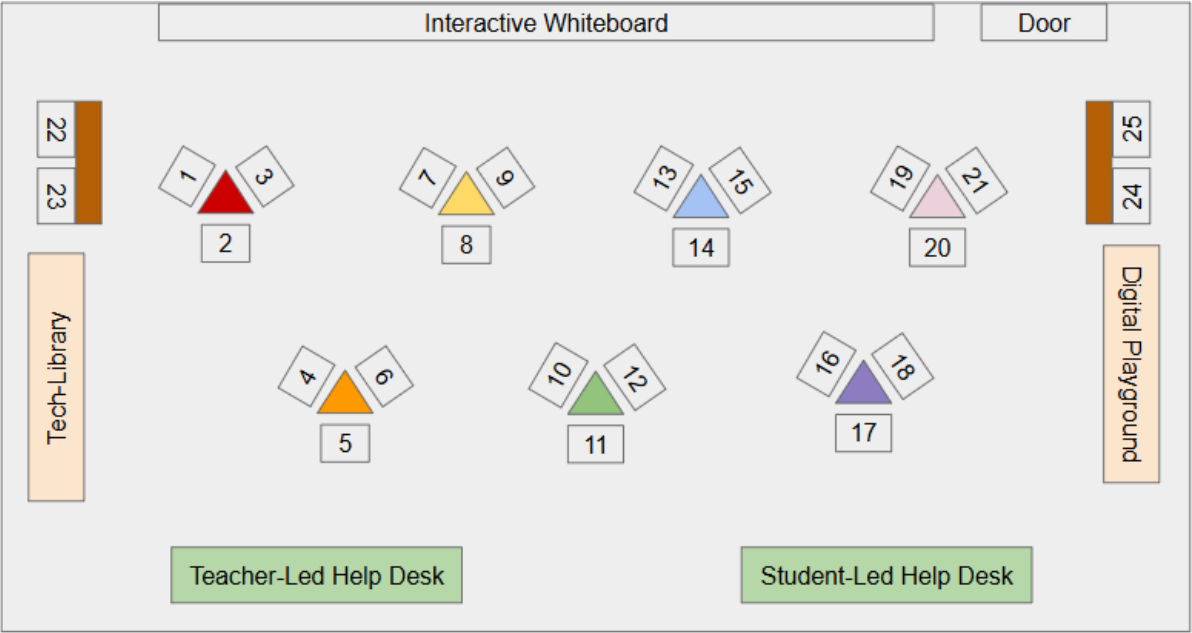
The lab features seven color-coded work stations:
Red – Coding & Logic (Scratch, Tynker, LEGO Spike)
Orange – Digital Art & Design (Wacom tablets, drawing software)
Yellow – Digital Storytelling (Book Creator, Flip)
Green – Research & Multimedia (PebbleGo, Britannica School, NoodleTools)
Blue – Typing & Keyboarding (TypingClub, Keyboarding Without Tears)
Purple – STEM & Math Exploration (Prodigy, PhET, Legends of Learning)
Pink – Game & Digital Design (Bloxels EDU, Kodable, TinkerCAD)
Each station has three desktop computers, matching rolling chairs, and a matching circle rug to visually define each zone. At the front of the room, an interactive whiteboard provides a dedicated area for teacher instruction. At the back of the room, two large areas for student and teacher-led help desks are available for students in the lab at the time. There is also a tech lending library for at-home use and a digital playground cart with items for free choice time or indoor recess.
Accessibility in Tech
Four height-adjustable workstations ensure full participation for every student. These stations include:
Larger desks
Ergonomic, soft-backed chairs
Privacy panels
Assistive software and other Universal Design for Learning Tools
Equipment & Budget Highlights
With a total investment cost of around $57,000, roughly 40% of the budget goes towards hardware needs. Other allocations include:
Furniture
Instructional tools
STEM kits for each workstation
Software licenses
Support for software monitoring
Why This Matters
The focus in the lab extends far beyond teaching students how to use basic technology. The lab provides students with the necessary tools to understand, troubleshoot, and integrate technology, which are lifelong skills necessary for success in our current digital age. It's about building our students' toolboxes with things that transfer across any discipline, like collaboration and creativity. Regular visits to a space like this can improve mental load in young students through the encouragement of self-regulated learning and metacognitive processes (Sergi et al., 2023).
Final Thoughts
As we continue to think about the future of technology in schools, it is important to remember the power a well-designed space can have. A computer lab is more than a room full of machines. It is a living environment blending physical and digital communities where young learners can thrive.
References
Anderson, M. A. (2017, January 1). Integrating Technology Then ... And Now From Computer Lab to Design Flexibility. Internet@schools, 24(2), 12–13.
Sergi, K., Elder, A., Tianlan Wei, Javorsky, K., & Jianzhong Xu. (2023). Self-Regulatory Metacognitive Skill Use in Elementary Students During Computer and Paper Reading Assignments: A Qualitative Study. International Electronic Journal of Elementary Education, 16(1), 1–16. https://doi.org/10.26822/iejee.2023.310
